Compression Leg Socks
Leg pain. Swelling. Heavy feet. Sounds familiar? That’s where compression leg socks step in. They are daily support for your legs—whether you are standing, sitting, walking or recovering. Let’s simplify it.
What are compression leg socks?
Compression leg socks are specially designed to apply graduated pressure to your legs. They are tightest at the ankle and become looser as they go up your leg. This pressure encourages blood to flow upwards, back to your heart. The result? Less swelling, less fatigue and greater comfort. It’s simple science with big advantages.
How Compression Leg Socks Work
When you stand or sit for long periods of time, blood can accumulate in your lower legs. That causes swelling, pain and tired legs. Compression leg socks gently squeeze the leg muscles. This helps veins move blood more efficiently. Oxygen reaches your muscles faster. Waste leaves quicker.
Your legs feel lighter. More energised.
Key Benefits of Compression Leg Socks
These socks do more than you think.
- Reduce leg swelling and inflammation
- Boost blood flow in the legs
- Relieve leg pain and muscle fatigue
- Help prevent varicose veins
- Support faster recovery after exercise
- Lower the risk of blood clots during long travel
That’s why athletes, travellers, nurses and office workers all use them.
What Is “mmHg” Mean in Compression Socks?
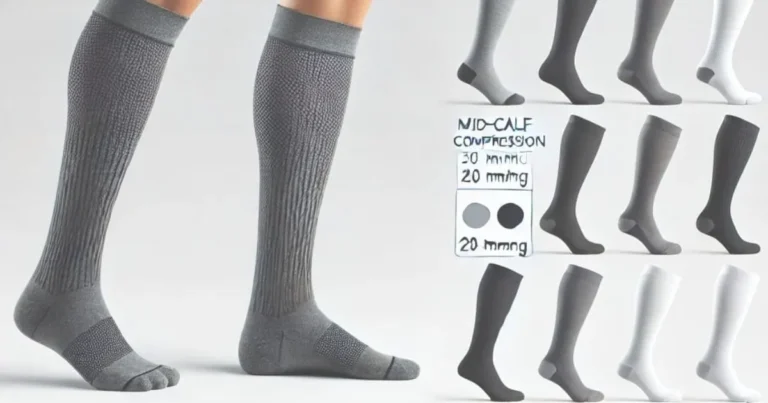
Compression leg socks come in different pressure levels, measured in mmHg. The abbreviation mmHg stands for millimeters of mercury. It is the unit used to determine how much pressure compression socks exert on your legs.
In simple words:
Higher mmHg means stronger compression. For example:
- 8–15 mmHg: Light support for everyday comfort
- 15–20 mmHg: Moderate compression for travel, swelling, and tired legs
- 20–30 mmHg: Firm compression for varicose veins and medical use
When you see mmHg on compression leg socks, it indicates the level of tightness and support they provide.
Materials Matter
Good compression leg socks aren’t just tight. They are also comfortable. Common materials Socks Materials include:
- Nylon or polyester for durability
- Spandex or elastane for stretch
- Cotton or bamboo blends for breathability
Final Thoughts
Compression leg socks are a small change with big results. They support your legs. Improve circulation. And help you move through the day with less pain and more comfort. Whether you are working long shifts, traveling far or staying active, compression leg socks are a smart everyday solution.