

Heat Socks
Why Your Feet Freeze (And Why Heat Socks Fix It)
Let’s keep it real cold feet ruin everything. Winter walk? Misery. Ski trip? Painful. Trying to sleep? Forget about it.
That’s where heat socks come in. They’re not just cozy—they’re engineered to trap warmth, lock in heat and keep your toes toasty for hours.
What Are Heat Socks?
Heat socks are any socks designed to keep your feet warm in cold weather. But not all heat socks are created equal.
Some are made from thermal yarns like wool, acrylic or fleece. Others go high-tech with battery-powered heating elements built into the fabric.
Here’s how they break down:
- Thermal Heat Socks: Use insulating materials to trap body heat.
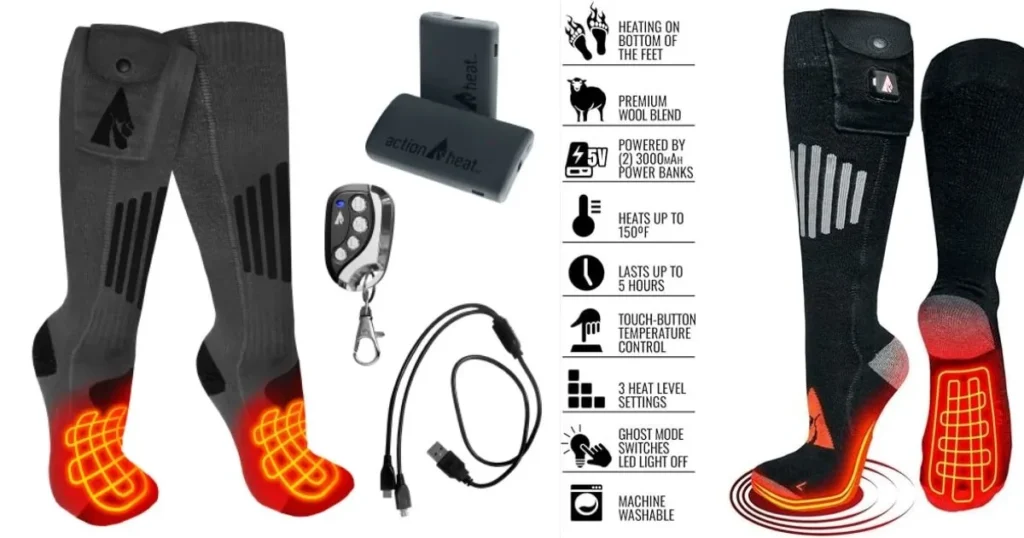
- Electric Heat Socks: Come with rechargeable batteries and heat zones.
- Everyday Warm Socks: Think thick cotton or fuzzy house socks—better than nothing, but not high performance.
Heat Holders: The King of Thermal Comfort
Now here’s where it gets good.
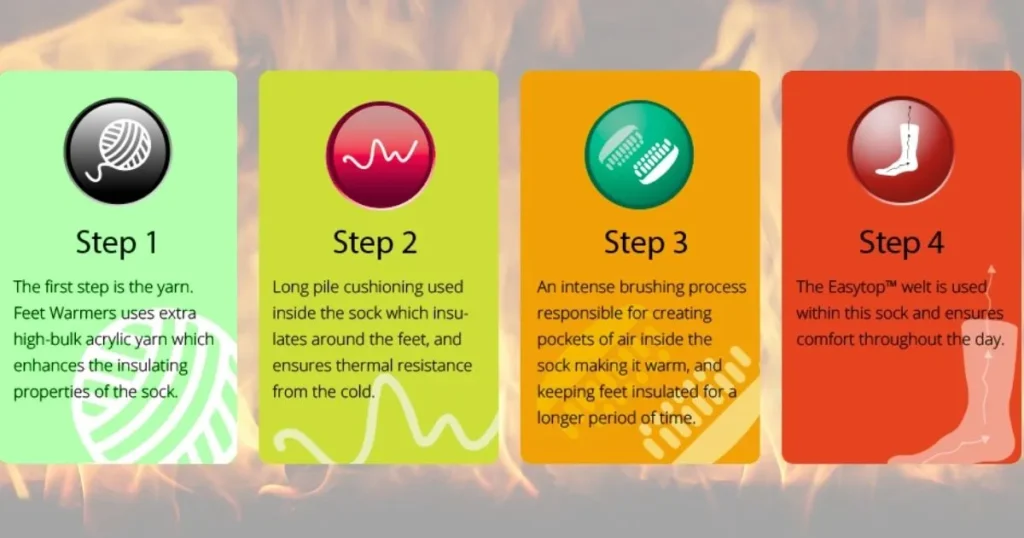
Heat Holders® is the brand that took thermal socks mainstream. And they didn’t do it with wires or batteries—they did it with science and yarn.
What’s in a Heat Holders Sock?
Heat Holders typically use a blend of thermal yarns, and acrylic is the star player in that mix. A common composition looks like this:
- 91% Acrylic
- 5% Nylon
- 3% Polyester
- 1% Elastane (or Spandex)
Why Acrylic?
Acrylic is lightweight, soft, and highly insulating. But more importantly:
- It traps warm air better than cotton
- It’s moisture-wicking (helps keep feet dry)
- It’s easy to brush, which is key to Heat Holders’ super-soft, heat-trapping inner lining
Heat Holders brushed the inside of the acrylic fabric to create a deep, fluffy layer that holds onto warmth longer.
What Makes Heat Holders Different?
- TOG Rating of up to 2.34
(Most regular socks? Around 0.3. It’s not even close.) - Thermal Yarn
Specially developed to provide insulation and moisture-wicking. - Brushed Inner Lining
Think of it like fleece on steroids—super soft and excellent at trapping warm air. - Non-Bulky Fit
Thick enough to keep you warm. Slim enough to actually wear inside shoes.
Are you familiar with the term TOG rating? Let me explain it.
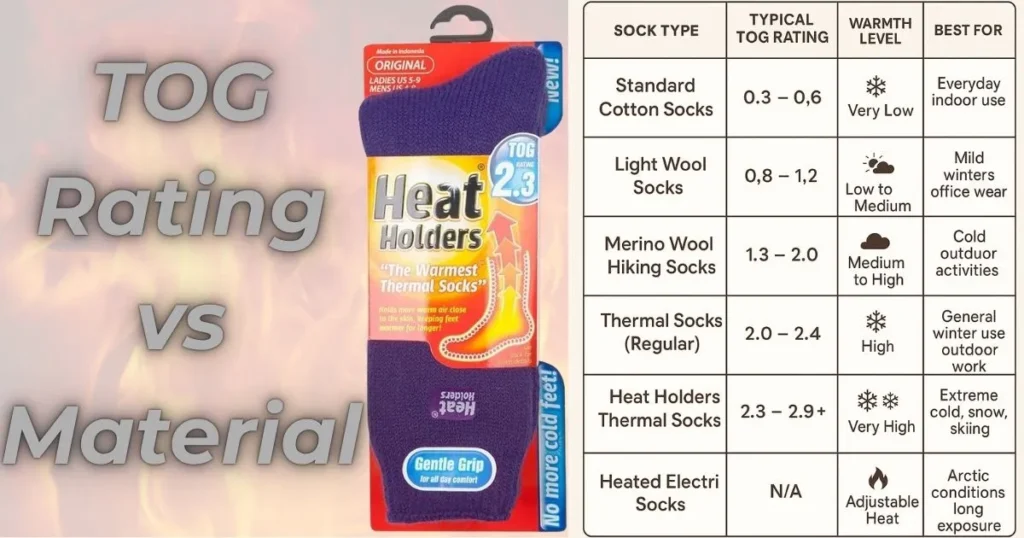
What Is TOG Rating?
TOG stands for Thermal Overall Grade. It measures how well a fabric retains heat—similar to how we measure insulation in duvets or jackets. The higher the TOG, the warmer the fabric.
1.0 TOG – Entry-Level Thermal
This is your basic thermal sock. Better than regular cotton, but not enough for freezing temps. Good for:
- Chilly mornings
- Wearing inside shoes
Layering under boots
1.7 TOG – Heavy-Duty Warmth
Now we’re talking. These are thicker socks, often wool blends. Great for:
- Long outdoor use
- Winter work boots
- Camping or hiking in cold weather
But… they can feel bulky in tight shoes.
2.34 TOG – Heat Holders’ Beast Mode
This is where Heat Holders Originals live. With a TOG of 2.34, they’re 7x warmer than cotton socks.
Perfect for:
- Extreme cold
- Raynaud’s or circulation issues
- Wearing around the house or outdoors
- Sleeping in freezing bedrooms
You’ll notice the difference immediately. They trap body heat like a thermal cocoon.
TOG Isn’t Just About Thickness
High TOG doesn’t always mean thicker.
Heat Holders socks use:
- Thermal yarn
- Brushed inner linings
- Advanced knitting techniques
That’s how they achieve a 2.34 TOG rating without being stiff or uncomfortable.
Quick Note:
Not all brands advertise TOG ratings. That’s why Heat Holders stands out they’ve tested their socks in labs and published real results.
Heat Socks vs. Heat Holders
| Feature | Heat Socks | Heat Holders |
| Definition | Any warm socks (thermal or heated) | A specific high-performance brand |
| Heating Style | Thermal or electric | Thermal only |
| Best For | Skiing, winter sports, cold homes | Everyday wear, outdoor use, Raynaud’s |
| Materials | Wool, fleece, electric mesh | Patented thermal yarn + fleece lining |
| Standout Feature | Varies | Highest TOG rating in thermal socks |
Who Needs Heat Holders?
If you live somewhere cold…If your feet are always freezing… If you’ve got Raynaud’s, poor circulation, or just hate the cold.
You need these.
Heat Holders aren’t gimmicks. They’re scientifically tested to retain heat better than most socks on the market. And they’re not just socks anymore—they now make
- Thermal base layers
- Hats
- Gloves
- Blankets
- Leggings
What About Battery-Powered Heat Socks?
Now, if you’re skiing in -20°C or ice fishing for 8 hours, Heat Holders might not cut it. In that case, you’ll want electric heat socks like:
- Lenz
- Hotronic
- ActionHeat
However, these can cost more than $100, require charging, and require special care. If you want simplicity + serious warmth? Heat Holders wins.
Pros and Cons of Heat Socks
Pros:
- Keep feet warm for long periods
- Great for winter, outdoor work, and poor circulation
- Heat Holders are affordable and low-maintenance
Cons:
- Electric versions need batteries
- Thermal socks (like Heat Holders) are too thick for tight shoes
- Some heated socks take a while to warm up
Where to Buy Heat Socks & Heat Holders
Best places to shop:
- HeatHolders.com (official)
- Amazon – Fast shipping, bundles
- Walmart / Target – In-store winter stock
- Outdoor retailers – For battery-powered models
FAQs
Final Thoughts: Should You Get Heat Socks?
If you hate cold feet. if you want comfort without tech headaches. if you want real thermal performance without breaking the bank. And if you want the best blend of comfort, warmth and value? Get Heat Holders. They’re not hype. They’re not gimmicks. They just work.


No matter if some one searches for his essential thing, therefore he/she wishes to be available that in detail,
thus that thing is maintained over here.
Thank you for your valuable feedback!
This article covers everything you need to know about heat socks, along with a few budget-friendly alternatives. If there’s something specific you’d like to include that we missed adding, feel free to share—we would be happy to add it for our readers.