Socks History
What is a sock?
Sock is a soft, stretchy layer you wear on your feet—usually under your shoes. Socks might look simple but they do a lot more than you think. They soak up sweat, cut down on rubbing and help stop blisters before they start. Your feet will stay cool in the summer and warm in the winter.
Made from materials like cotton, wool, polyester, and spandex, socks come in all kinds of shapes, sizes, and thicknesses. Some are built for comfort. Others for sports. Some just to look good. These days, socks aren’t just about protection—they’re part of your style. Bold colors, cool prints, or clean basics… they say something about you. Small item. Big impact. That’s a sock.
History of Socks
A Quick Walk Through Sock History
Socks have been worn since ancient times. The oldest ones? Found in Egypt around 2500 BC—made from woven animal hair with split toes to fit inside sandals.
Fast forward to Ancient Greece, and people were wearing “piloi”—thick socks made from matted hair. The Romans had their own version too, called “udones,” sewn from soft fabrics. The word “sock” we use today originates from the Latin “soccus,” a soft slipper worn by Roman actors. In ancient times, socks symbolized warmth, protection and status.
During the Middle Ages, they became a fashion statement among the wealthy and clergy. The significant turning point occurred in 1589 when William Lee invented the first knitting machine, enabling faster sock production.
The Industrial Revolution advanced sock-making with mass production using cotton and wool. Later, in the 20th century, synthetic fibers like nylon, polyester, and elastic materials revolutionized the scene, offering improved stretch, comfort style and fashion.
Today? Socks are everywhere. From basic cotton crews to grip socks, compression socks, thermal socks, and even smart socks—they’re not just for your feet. They’re about performance, comfort, and expression.

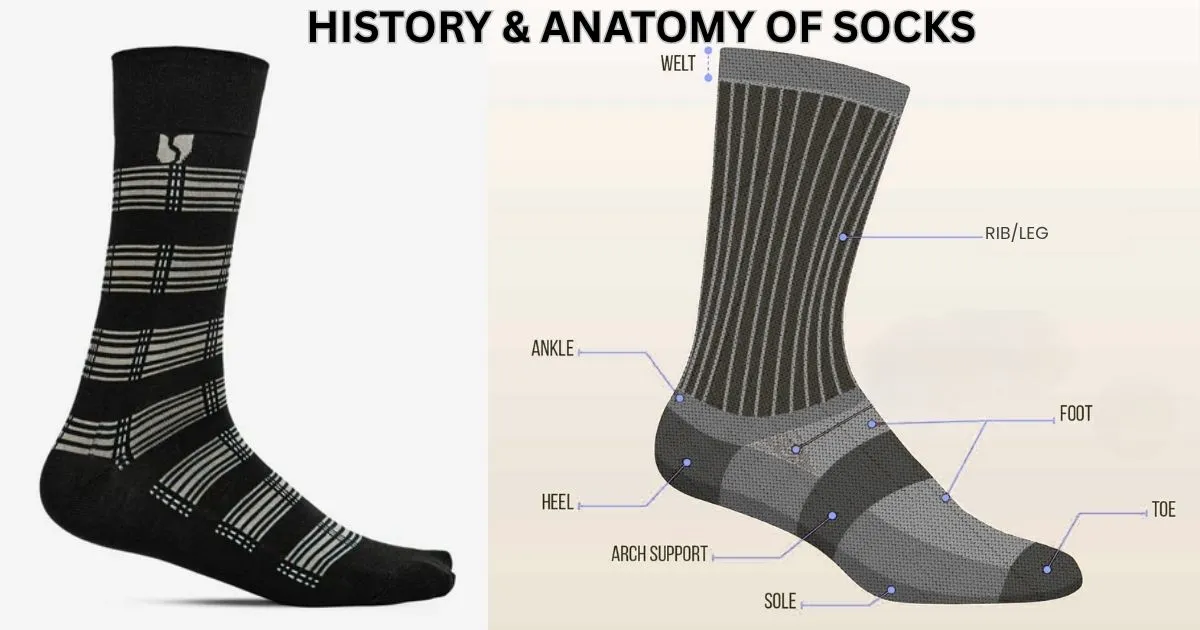
Anatomy of Socks: What Makes Up a Sock?
You wear them every day. But have you ever stopped to think what makes up a sock? From top to toe, every part plays a role in comfort, fit and function. Let’s break it down.
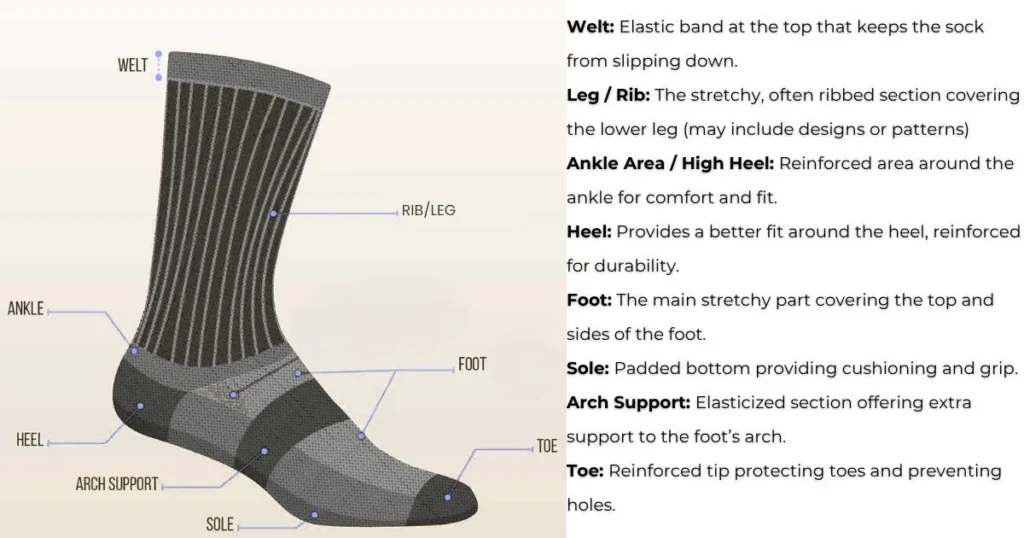
1. Welt/Cuff
This is the uppermost edge of the sock—the cuff that secures everything in place. Usually made of a tight, elastic band, it prevents the sock from slipping down your leg, acting as an anchor.
2. Rib/Leg
Directly beneath the welt, the rib or leg section provides structure and support. The ribbed knitting offers stretch and grip, allowing the sock to conform to your calf or ankle. This section also enhances airflow and flexibility.
3. Ankle Area/High Heel
The ankle zone acts as a pivot between the leg and the foot. It must be snug but not tight, providing a secure fit while allowing easy movement.
4. Heel
The heel pocket is shaped to hug your heel for a better fit. It prevents the sock from sliding down or bunching up inside your shoe. A well-formed heel produces less friction and blisters. There are many types of heels but most commons are Real Heel, Y-Heel and Pouch Heel.
5. Foot
The foot section covers the top of your foot. It’s designed to fit snugly and work in sync with your shoe, providing comfort and breathability.
6. Sole
The sole is the sock’s bottom, where the majority of the pressure is concentrated. It is typically reinforced or cushioned to absorb shock and reduce wear and tear.
7. Arch Support
This is a key feature in performance and athletic socks. Elastic bands or tighter knitting around the arch give extra support and help the sock stay in place—great for workouts or long days on your feet.
8. Toe
At the front end, the toe section can be seamless or reinforced. Seamless toes reduce irritation, while reinforced toes add durability, especially important in high-friction zones.
Top Benefits of Wearing Socks
Socks do more than just cover your feet. They protect, support, and elevate your entire walking experience. Let’s break down all the benefits you get from this underrated daily essential:
1. All-Day Comfort
Socks add a soft layer between your feet and your shoes. They cushion each step, reduce pressure, and prevent skin irritation, especially when you’re on your feet all day.
2. Moisture Management
Feet sweat—a lot. Quality socks made with breathable fibers like cotton, wool, or moisture-wicking synthetics help absorb sweat and keep your feet dry. This prevents fungal infections and nasty smells.
3. Temperature Regulation
Socks act like climate control for your feet. Thermal socks trap heat in winter, while lightweight or mesh-knit socks allow airflow in hot weather, keeping your feet at the right temperature.
4. Odour Control
By absorbing sweat and reducing bacterial growth, socks keep foot odour in check. Anti-odour socks even use special yarns (like silver or copper-infused fibers) to fight bacteria naturally.
5. Better Hygiene
Socks create a clean barrier between your feet and your shoes. They protect your skin from dirt, sweat buildup, and potential fungal infections, especially in closed footwear.
6. Blister Prevention
Without socks, the friction between your skin and your shoe can lead to painful blisters. Socks reduce that rubbing and offer smoother movement with each step.
7. Cushioning & Shock Absorption
Reinforced soles or padded areas in the heel/toe add extra comfort and reduce impact—ideal for runners, athletes, and people who stand all day.
8. Arch and Ankle Support
Compression socks or arch-support styles help with posture, circulation, and foot fatigue. Perfect for workouts, travel, or long shifts.
9. Enhanced Shoe Fit
Socks help fill space in slightly loose shoes and reduce tightness in snug ones. They also stop your feet from sliding inside your footwear.
10. Style & Self-Expression
From bold patterns to minimalist neutrals, socks are a simple way to express personality. They complete the outfit, whether you’re dressing casually, professionally, or sporty.
11. Protection from Cold & Weather
Cold feet? Not with socks on. They protect against frostbite in winter, dust in dry seasons, and even bug bites or scrapes if you’re barefoot in shoes or sandals.
12. Reduced Swelling
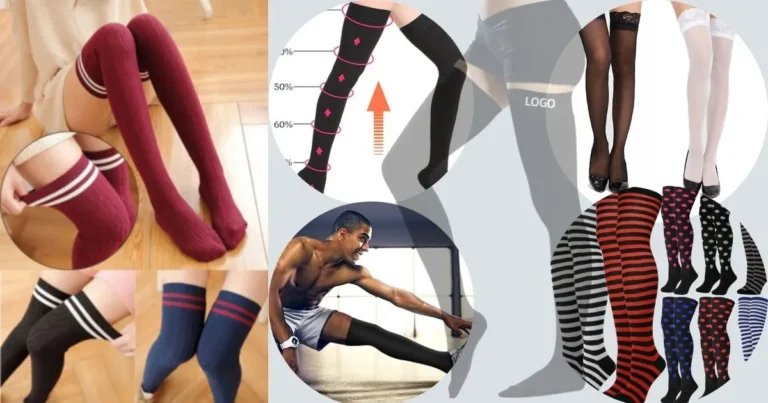
Compression socks help improve circulation and reduce swelling, especially useful for pregnant women, travelers, and people with circulation issues.
13. Specialised Functions
Some socks are made for specific needs:
- Grip socks for athletes (better traction)
- Diabetic socks (non-binding, seamless)
- Pilates/Yoga socks (with grips)
- Flight socks (anti-DVT)
Pros and Cons of Socks:
Pros of Socks:
- Keep feet comfortable and dry
- Prevent blisters and odour
- Offer warmth in cold weather
- Add style to your outfit
- Improve hygiene and fit inside shoes
- Provide support (e.g., arch, compression)
Cons of Socks:
- It can cause sweaty feet if poorly made
- Tight elastic may leave marks
- A wrong fit causes discomfort or bunching
- Extra laundry and easy to lose
- Some fabrics may cause allergies or irritation
FAQs
Final Words
Socks might seem simple but they’ve come a long way. From ancient foot wraps made of hair to high-tech, grip-enhanced performance wear, socks have evolved with us, step by step. Understanding their anatomy shows just how much engineering goes into keeping our feet supported, dry and comfortable.
Whether it’s the welt, the heel or the toe, every part has a job. And when you look at their history, it’s clear: socks have always been more than just foot covers—they’re a blend of comfort, culture and clever design. So next time you slip on a pair, remember—you’re not just wearing fabric. You’re walking in a piece of history, built with purpose from top to toe.

Woah! I’m really enjoying the template/theme of this blog. It’s simple, yet effective.
A lot of times it’s hard to get that “perfect balance” between superb usability
and visual appearance. I must say you’ve done a great job with
this. Additionally, the blog loads extremely fast for me on Chrome.
Exceptional Blog!
Thank you so much for your kind words! We are glad you enjoyed the design and performance of the blog. Creating a balance between usability and visual appeal is always a priority for us, so it’s great to hear that it’s working well for you. Your feedback truly means a lot and motivates us to keep improving.
Oh my goodness! Amazing article dude! Thanks, However I am having difficulties with your RSS.
I don’t understand the reason why I cannot subscribe to it.
Is there anyone else having the same RSS issues? Anybody who knows the answer can you kindly
respond? Thanx!!