
Organic Cotton Socks
Your feet are sweaty. Your socks smell. You’ve bought “good” socks before, but they stretched out, lost shape and felt rough after a few washes.
The majority of socks are actually made from a combination of inexpensive synthetic materials and regular cotton. They’re mass-produced, chemical-filled, and designed to wear out fast. However, there is a better option: organic cotton socks. These aren’t just socks. They’re a healthier, softer and more sustainable choice. Once you try them, you’ll never go back.
What Is Organic Cotton?
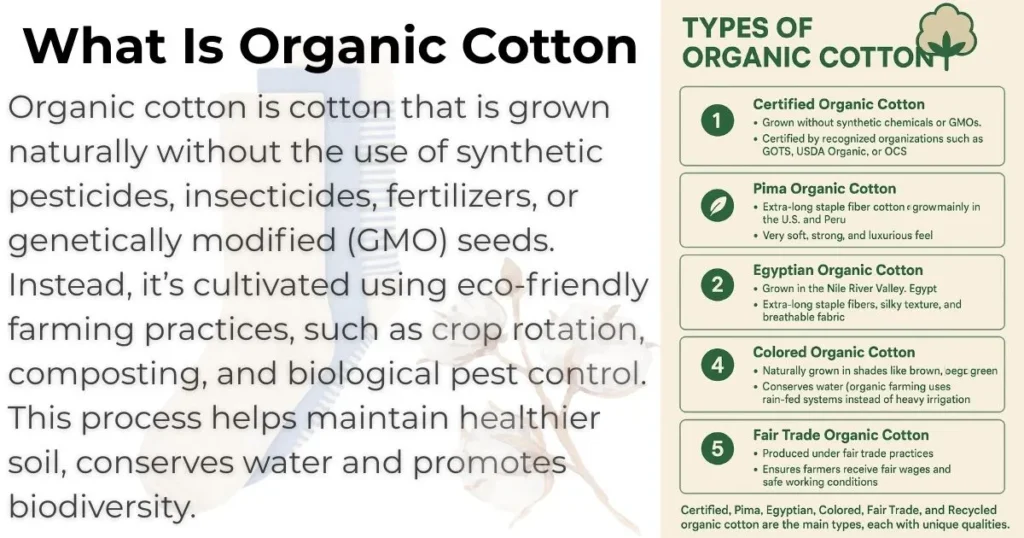
Your bed linens, socks and T-shirts are all made of cotton. But not all cotton is created equal. The majority of cotton that is sold in stores is produced conventionally, which has a substantial negative influence on the environment and uses synthetic fertilizers, pesticides and genetically modified seeds.
Organic cotton flips that story. It’s grown the natural way. No chemicals. No GMOs. Just clean, safe, eco-friendly farming. Certifications like GOTS (Global Organic Textile Standard) or OEKO-TEX on the label, guarantee the cotton is grown and processed without chemicals or pesticides. If a product states “100% organic cotton,” it indicates every fiber originates from certified organic farms.
How Organic Cotton Is Grown
Organic cotton farming follows strict standards. Farmers can’t just stop spraying chemicals and call it organic—it’s a whole process.
- Non-GMO Seeds
- Farmers use natural, untreated seeds.
- No genetic engineering allowed.
- Natural Soil Health
- Instead of chemical fertilizers, they use compost, manure, and crop rotation.
- This keeps the soil rich and alive.
- Pest Control Without Toxins
- Farmers use insects, birds, and natural sprays to keep pests away.
- No harmful pesticides that ruin ecosystems.
- Water Conservation
- Organic farms often rely on rainwater instead of irrigation.
- According to studies, it uses a lot less water than traditional cotton.
- Harvesting & Processing
- Cotton is picked and processed without toxic chemicals or dyes.
- The result? Cleaner fibers, safer fabrics.
What Exactly Are Organic Cotton Socks?
Organic cotton socks are crafted from cotton grown without pesticides, fertilizers, or harmful chemicals. The soil is healthier, the fibers are stronger and the finished product feels cleaner on your skin. Think of it like food: regular cotton is fast food. Organic cotton is farm-to-table. One pollutes. The other nourishes. With organic cotton socks, you get:
- Natural fibers with no toxins.
- Breathable comfort that keeps your feet fresh.
- A smaller environmental footprint every time you buy.
The Benefits of Organic Cotton Socks
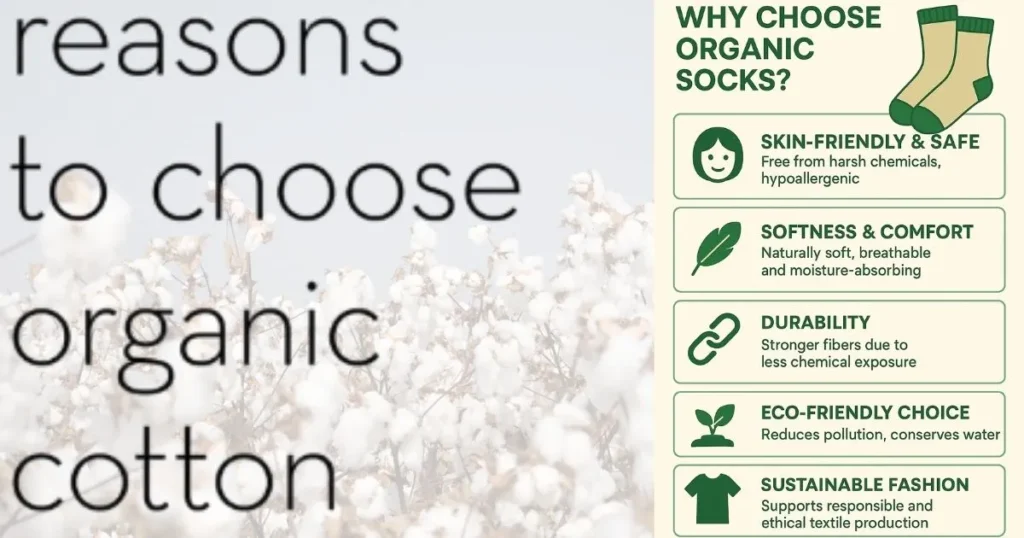
1. Durable Softness
The fibers are broken down by the extensive chemical processing used on regular cotton. The socks feel naturally softer even after numerous washings because the fibers of organic cotton remain stronger and intact.
2. Breathability
Your feet sweat up to half a pint a day. Organic cotton’s natural fibers wick moisture away instead of trapping it, keeping your feet cooler, drier and more comfortable.
3. Skin-Friendly
No use of pesticides. No final chemical finishes. Just pure cotton against your skin. If you deal with itchy feet, rashes or sensitive skin, organic socks are the safe choice.
4. Longer Lifespan
Because the fibers aren’t chemically weakened, organic cotton socks hold their shape longer. No sagging. No thinning. Just durable, dependable comfort.
5. Eco-Friendly Choice
Organic farming saves water, protects soil and keeps chemicals out of rivers and oceans. Every pair of socks is a small step toward a healthier planet.
6. Odor Control
Less sweat and better breathability mean fresher feet. Organic cotton naturally helps reduce odor without needing special “anti-odor” chemical coatings.
7. Temperature Regulation
Organic cotton fibers adapt to your body. They keep your feet cool in the summer and warm in the winter. A true year-round fabric.
8. Ethical Production
Most organic cotton is grown under fair trade standards. That means safer conditions for farmers, no child labor and wages that support families.
9. Non-Toxic Colors
Many organic cotton socks use plant-based or low-impact dyes. You get stylish colors and patterns without harmful residues rubbing against your skin.
10. Biodegradable & Sustainable
Unlike synthetic socks that end up in landfills for decades, organic cotton socks are biodegradable. They don’t pollute the earth when they eventually wear out.
Types of Organic Cotton Socks
Not all organic cotton socks are the same. Let’s break down the styles:
- Casual Crew Socks: Everyday wear, perfect for jeans or loungewear.
- Ankle Socks: Lightweight, breathable and great for sneakers.
- Dress Socks: Sleek, slim-fit for office or formal outfits.
- Sport Socks: Cushioned soles, arch support, perfect for running or the gym.
- Winter Socks: Thicker knits for warmth in cold weather.
- Fashion Socks: Fun colors, patterns and eco-friendly dyes.
Pros and Cons of Organic Cotton Socks
| Pros | Cons |
| Soft and breathable | More expensive than regular socks |
| Eco-friendly & sustainable | May shrink slightly if washed hot |
| Long-lasting & durable | Limited stretch compared to synthetics |
| Skin-safe & hypoallergenic | Slower drying time |
| Odor and sweat control | Limited flashy designs (depends on brand) |
Who Should Wear Organic Cotton Socks?
- Athletes: Sweat control and breathability.
- People with sensitive skin: No chemical irritation.
- Eco-conscious buyers: Reduce your footprint.
- Professionals: Soft, stylish and long-lasting.
- Kids: Gentle on growing feet.
How to Care for Organic Cotton Socks
- To avoid shrinkage, wash in cold water.
- Use gentle detergent instead of harsh ones.
- Air-dry when possible.
- Avoid bleach or fabric softeners.
Do this and your socks will last longer while staying soft.
Organic Cotton Socks vs Regular Cotton Socks
| Feature | Organic Cotton Socks | Regular Cotton Socks |
| Farming | No chemicals, sustainable | Heavy pesticides, soil damage |
| Comfort | Softer, breathable | Rougher, less breathable |
| Durability | Stronger fibers, longer lasting | Weaker fibers, wear out faster |
| Skin Safety | Hypoallergenic, chemical-free | Can irritate sensitive skin |
| Environmental Impact | Eco-friendly, low water use | High water, chemical pollution |
FAQs
Final Word
The foundation of your body is your feet. They help you get through long days when you hardly sit down, work, work out and travel. Cheap, synthetic, chemical-filled socks do more harm than good. They trap sweat. They smell. They wear out fast. And worst of all? They contribute to pollution every time they’re made.
Organic cotton socks change that. They’re soft enough for daily wear, strong enough to last and safe enough for even the most sensitive skin. And here’s the bigger picture: every pair you buy supports organic farming. That means fewer pesticides in the soil, less polluted water, safer farmers and a cleaner planet for the next generation.
So, the choice isn’t really between “regular socks” and “organic socks.” There is a choice between sustainable and disposable. Between long-term value and short-term savings. You have to choose between merely covering your feet and actually caring for them. Don’t settle for socks that fail you. Upgrade to organic cotton socks.