Top 10 Oldest Textile Companies
what is Textile
Textile is a material made by spinning natural or synthetic fibers into yarn and then forming fabric through weaving, knitting, or other processes. It is commonly used to produce clothing, home furnishings and industrial products and includes fabrics such as cotton, wool, silk, polyester and blended materials.
History of Textile
Textiles are as old as human survival. Long before fashion existed, people needed protection from the weather, heat, and cold. The earliest textiles were made from natural materials like animal skins, plant fibers and grasses, twisted or woven by hand.
Around 7000–8000 BCE, early civilizations began spinning fibers such as flax and wool into yarn. This marked the birth of true textile production. Ancient Egypt became famous for its linen, while Mesopotamia and India developed advanced weaving techniques using cotton and wool.
By 3000 BCE, textile making had evolved into a skilled craft. China introduced silk, a luxury fabric that later shaped global trade through the Silk Road. Textiles were no longer just practical—they became symbols of wealth, culture and identity.
The biggest shift came during the Industrial Revolution (18th century). Machines like the spinning jenny and power loom transformed textile production from hand-crafted to mass-produced. Fabrics became more affordable and widely available than ever before.
In the 20th century, innovation accelerated with the invention of synthetic fibers such as nylon, polyester and acrylic. Today, the textile industry blends tradition with technology, focusing on performance fabrics, sustainability and smart textiles.
From basic survival to global fashion, textiles have always woven themselves into human history—and they are still evolving.
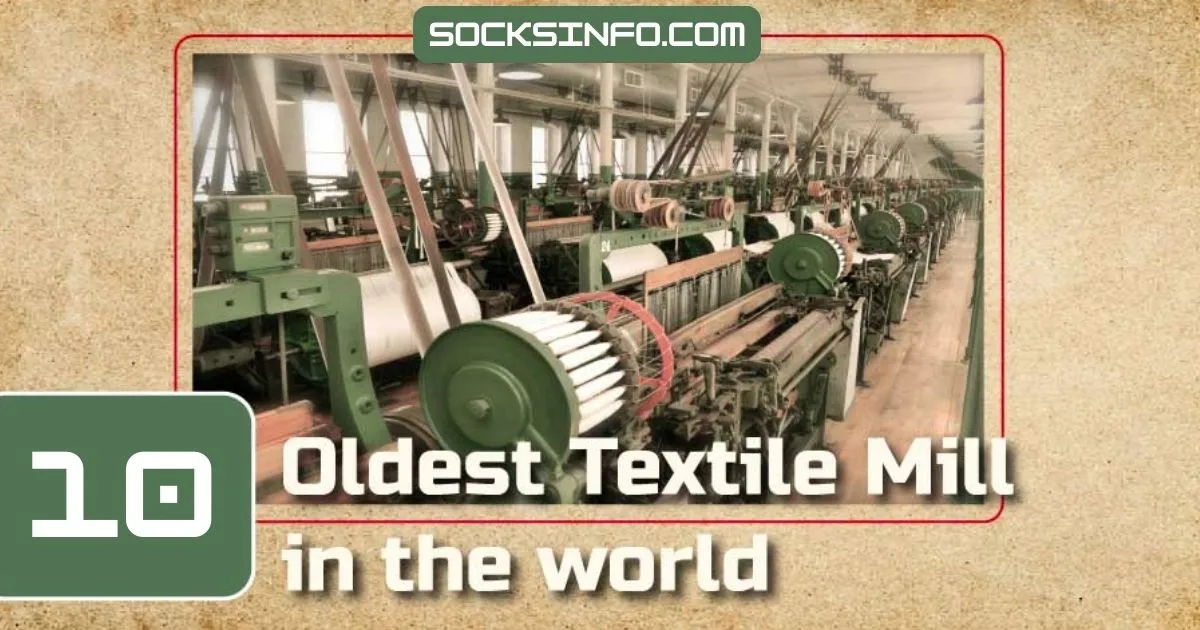
Top 10 Oldest Textile Companies
The textile industry is one of the oldest industries on Earth. Long before modern factories, people were weaving, dyeing, and knitting fabrics by hand. While most early textile businesses disappeared with time, a rare group of companies survived centuries of change—and are still operating today.
These companies endured wars, economic collapses, industrial revolutions and shifting fashion trends. Their secret? A relentless focus on craftsmanship, quality and adaptation.
This article explores the top 10 oldest textile companies in the world that continue to operate, produce fabrics and influence the modern textile and fashion industries.
Why Textile Longevity Is So Rare
Textiles are deeply affected by:
- Changing fashion trends
- Technological disruption
- Global competition
- Cost pressure and mass production
Most companies fail to survive even 50 years. Surviving 200–400+ years is almost unheard of. That’s what makes these companies extraordinary.
Top Oldest Textile Companies Still Operating
The Top 10 Oldest Textile Companies still operating today showcase centuries of craftsmanship and resilience, with more detailed information provided below.
1. Chiso (Japan – Founded 1555)
Founded in Kyoto in 1555, Chiso is widely regarded as the oldest textile company in the world still in operation. The company specializes in luxury kimono fabrics, especially hand-dyed silk using traditional Japanese techniques. Chiso’s strength lies in preserving centuries-old craftsmanship while serving modern ceremonial and luxury markets. Even today, its textiles are symbols of Japanese cultural heritage.
Key strength: Traditional silk dyeing and kimono textiles
Legacy: Over 450 years of continuous operation
2. Vitale Barberis Canonico (Italy – Founded 1663)
Founded in 1663, Vitale Barberis Canonico (VBC) is the oldest wool mill in the world. Based in Italy, it is a global leader in premium wool fabrics used by luxury menswear brands. VBC successfully transitioned from manual weaving to modern industrial production without sacrificing quality. Sustainability and traceability are now core pillars of the brand.
Key strength: High-end wool suiting fabrics
Legacy: Luxury tailoring and innovation
3. Wolsey (United Kingdom – Founded 1755)
Wolsey began in England as a hosiery and knitwear manufacturer. It played a major role in shaping the early British textile industry and became famous for socks, underwear, and knit garments. Despite changing ownership over time, the brand remains active today, especially in apparel and hosiery.
Key strength: Hosiery and knitwear
Legacy: One of Britain’s earliest sock-focused brands
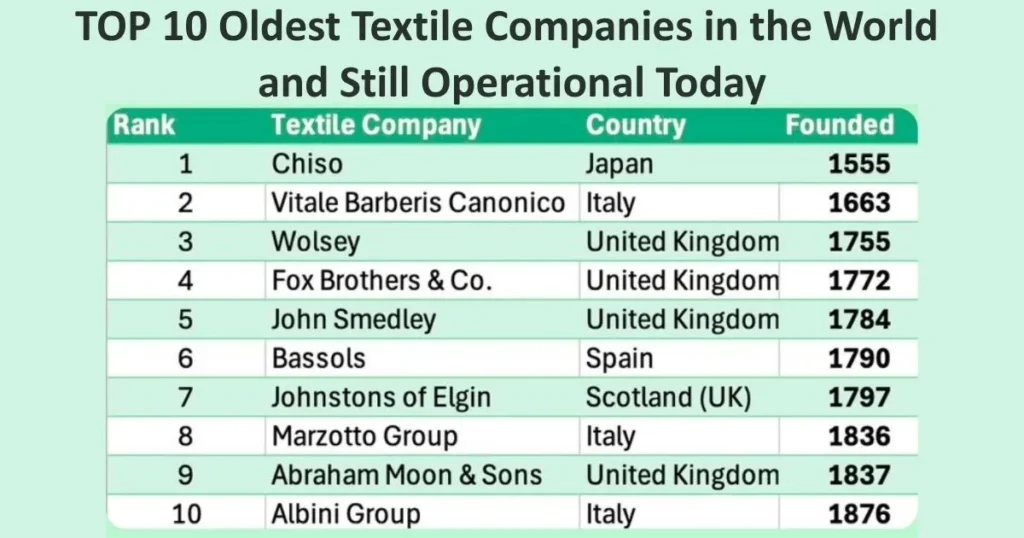
4. Fox Brothers & Co. (United Kingdom – Founded 1772)
Established in Somerset, England, Fox Brothers is famous for its premium flannel fabrics. The company supplied fabrics to military uniforms and later became a staple in luxury tailoring. Fox Brothers remains family-owned and continues to produce some of the finest flannels in the world.
Key strength: Wool flannel fabrics
Legacy: Military and luxury textile supplier
5. John Smedley (United Kingdom – Founded 1784)
John Smedley is a world-renowned knitwear manufacturer known for fine-gauge merino wool and cotton garments. Operating from the same Derbyshire site for centuries, the brand blends tradition with sustainability. It is one of the oldest manufacturers still producing textiles in the same original location.
Key strength: Premium knitwear
Legacy: Craftsmanship and continuity
6. Bassols (Spain – Founded 1790)
Spain’s Bassols specializes in luxury home textiles, including bedding and bath linens. The company supplies royal households, luxury hotels, and premium consumers. Bassols survived by focusing on exclusivity rather than mass production.
Key strength: High-end home textiles
Legacy: Royal and luxury heritage
7. Johnstons of Elgin (Scotland, UK – Founded 1797)
Founded in Scotland, Johnstons of Elgin is globally respected for cashmere and fine wool fabrics. The company controls the full process—from raw fiber to finished product. Its commitment to sustainability and craftsmanship keeps it relevant in modern luxury markets.
Key strength: Cashmere and fine wool
Legacy: Vertical integration mastery
8. Marzotto Group (Italy – Founded 1836)
The Marzotto Group is a textile powerhouse that played a pivotal role in industrialising Italian fabric production. Over time, it expanded into fashion brands and global manufacturing. Today, Marzotto remains a key supplier of fabrics to international fashion houses.
9. Abraham Moon & Sons (United Kingdom – Founded 1837)
Abraham Moon is known for British wool fabrics, especially tweeds and coatings. Unlike many historic mills, it continues to produce fabric entirely in the UK. The brand balances heritage designs with modern fashion demands.
Key strength: Wool tweeds and coatings
Legacy: British-made authenticity
10. Albini Group (Italy – Founded 1876)
Albini Group is a global leader in luxury cotton shirting fabrics. Its textiles are used by premium fashion and tailoring brands worldwide. Albini invested heavily in innovation, sustainability and fiber research, securing its place in modern textile supply chains.
Key strength: High-quality cotton fabrics
Legacy: Innovation-driven longevity
What These Companies Teach the Modern Textile Industry
These companies survived because they:
- Focused on quality over volume
- Adapted to new technology
- Preserved core craftsmanship
- Built strong brand trust
- Served premium and niche markets
They didn’t chase trends. They built systems that lasted.
Why This Matters Today
In a fast-fashion world, these companies remind us that heritage, sustainability and craftsmanship still matter. Their fabrics are still worn, used, and admired centuries after their founding.
For textile manufacturers, apparel brands and even sock producers, these companies serve as proof that long-term success comes from consistency, not shortcuts.
Final Words
The world’s oldest textile companies are more than just brands. They are living proof of craftsmanship, resilience and innovation passed down through generations. From handwoven fabrics to modern production, these companies shaped the global textile industry and continue to influence how fabrics are made, worn and valued today.