Cushioned Socks Types
The Ultimate Guide to Cushioned Sock Levels
You’re wearing socks that don’t support you, and it’s wrecking your feet. Your heels ache. Your toes are sore. Your feet sweat like crazy or get blisters halfway through the day. Why? You’re using the wrong sock cushioning. And you probably don’t even know it. Most people don’t.
This guide fixes that. We’re breaking down the major types of cushioned socks, what they are, who needs them, and how they feel. After this, you’ll never guess which socks to wear again. You’ll know.
What Is Sock Cushioning?
Sock cushioning is the layer of padding built into a sock, usually made with terry loops (small fabric loops that trap air). That padding helps absorb shock, prevent blisters, and keep your feet cozy.
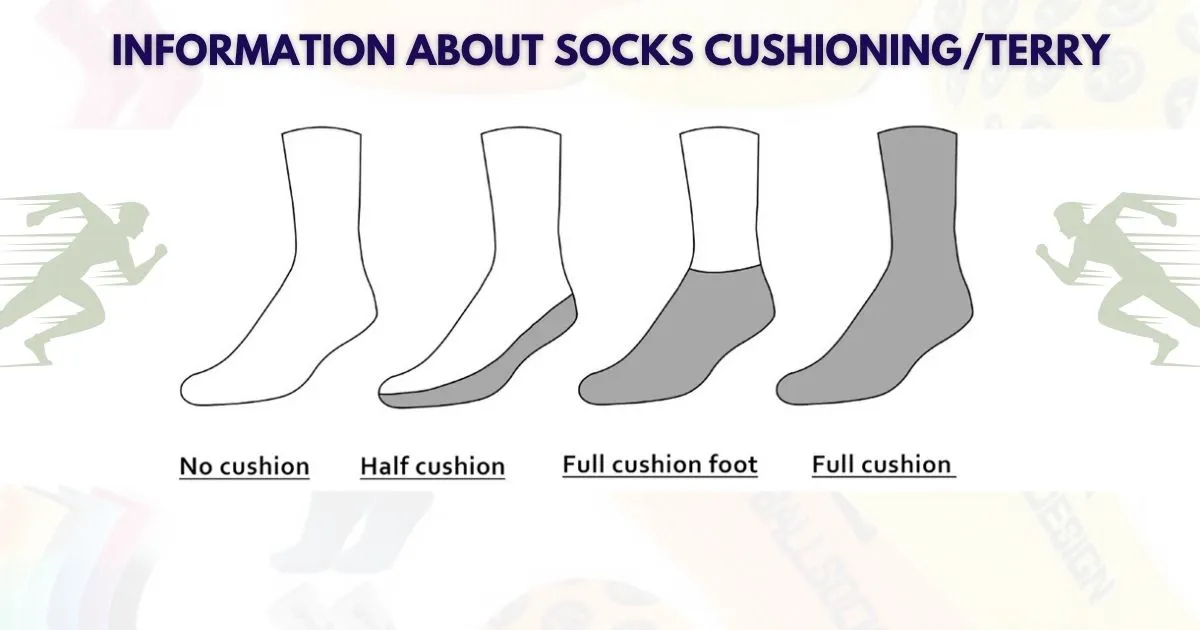
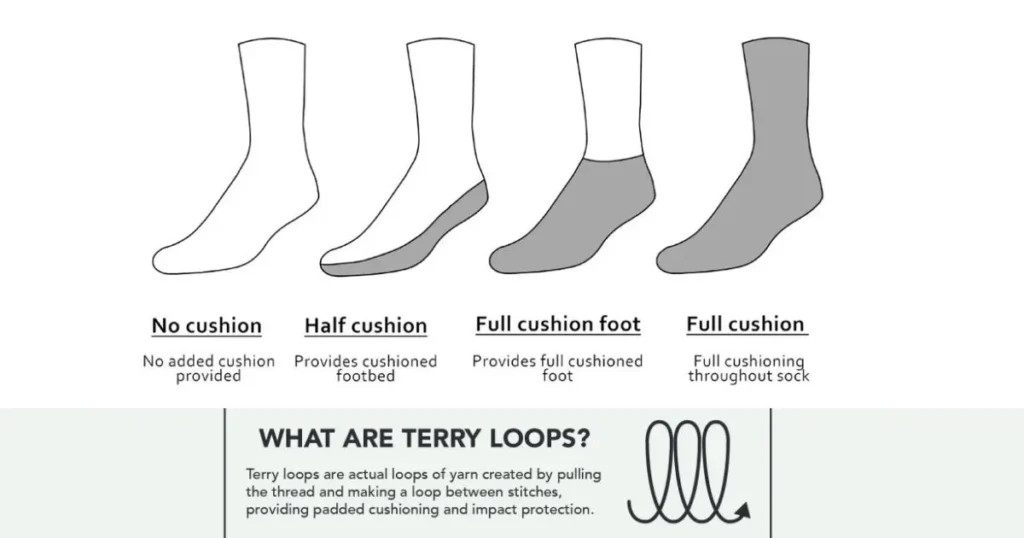
Cushioned socks come in different levels—from no cushion to full cushion. The right level depends on your activity, footwear, and how much impact or warmth you need.
What are Terry loops?
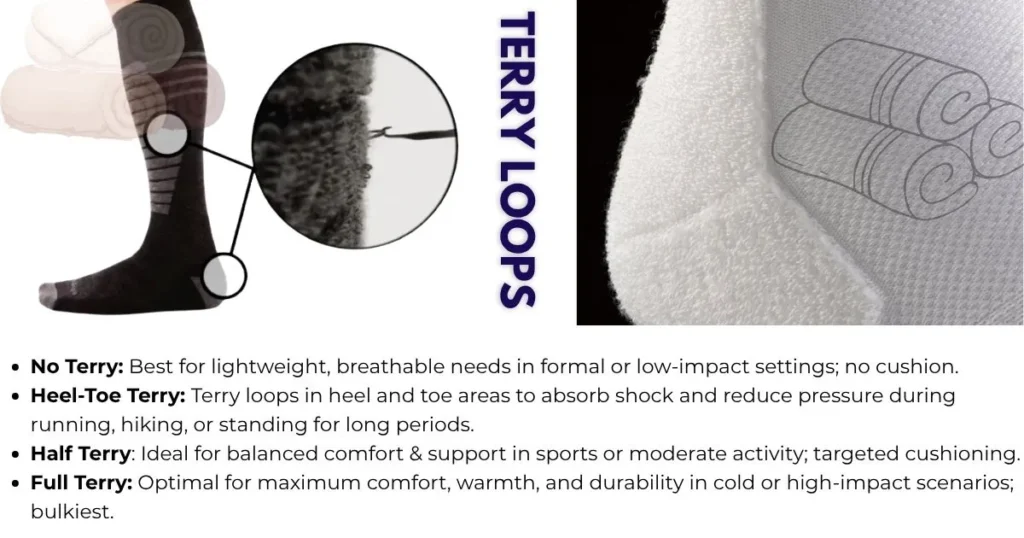
Terry loops are tiny, soft loops of yarn knitted into the inside of a sock, usually in the sole or other high-impact areas. They’re what gives cushioned socks their plush, padded feel. The more terry loops, the thicker and more shock-absorbing the sock becomes.
Think of them as built-in mini pillows for your feet. They’re the key reason your socks feel soft, absorb impact, and reduce friction that leads to blisters.
Why Cushioned Socks Matter
- Reduces impact when walking, running, or standing
- Prevents blisters by reducing friction
- Adds warmth in cold weather
- Improves comfort during long wear
- Supports pressure zones like heels, toes, and arches
Types of Cushioned socks
No one cushion fits all. Let’s break down the main types.
1. No Cushion Socks
No-cushion socks are the lightest option available. They have no added padding—just a sleek, close-to-skin fit. Usually made from thin yarns, they focus on breathability and low bulk.
Consider the sensation of being barefoot, combined with moisture-wicking properties and protection against shoe rub.
Who They’re For:
- Minimalist runners
- Cyclists
- People who want maximum ground feel
- Everyday wear in hot weather
Pros:
- Light and breathable
- Perfect for tight-fitting shoes
- Great moisture control
Cons:
- No shock absorption
- Less comfortable for long days
Best For: Low-volume shoes, tight sneakers, spin class, or summer wear.
2. Heel and Toe Cushioning
Heel and toe cushioning targets just two pressure zones: the back and front of your foot. This focused padding helps reduce friction, absorb shock, and prevent blisters exactly where you need it.
You get a lightweight sock with reinforced comfort and durability. It’s a favorite in performance socks and everyday wear for people who need a little extra protection but don’t want full-foot bulk.
Who They’re For:
- Athletic trainers
- Business professionals in dress shoes
- Anyone on their feet for long hours
Pros:
- Reinforced high-impact zones
- Less friction = fewer blisters
- Doesn’t add bulk to rest of the sock.
Cons:
- Limited cushioning coverage (heel-toe area)
- Not ideal for full-day hiking or rough terrain
Best For: Athletic training, business or dress shoes, long days on your feet
3. Half Cushion Socks
Half-cushion socks are the middle ground. They add padding in high-impact areas, usually the heel and forefoot (foot sole). The rest of the sock stays light and breathable. This combo gives comfort without overheating or bulk.
Who They’re For:
- Runners
- Walkers
- Gym-goers
- People are on their feet. 6–8 hours a day
Pros:
- Cushioned where you need it
- Lightweight everywhere else
- Keeps feet cool and comfy
Cons:
- Not ideal for extreme cold
- Might feel too light for all-day wear in boots
Best For: Running, fitness, light hikes, casual workdays.
4. Full Cushion Foot Socks
This type cushions the entire foot—heel, toe, and sole. The leg of the sock stays thinner for flexibility. It’s perfect when you need impact protection for your feet but don’t want full heat coverage up the leg. Think of it as a sock that works hard underfoot but keeps the rest of your leg cool.
Who They’re For:
- Hikers
- Warehouse workers
- People in steel-toe boots
- Cold-weather runners
Pros:
- More comfort underfoot
- Less leg sweat
- Still breathable on the calf/shin
Cons:
- Not as warm as full-cushion socks
- May slip in loose boots
Best For: Hiking boots, long walks, cold floors, manual labour.
5. Full Cushion Socks
Full cushion socks are the thickest and most padded. They use terry loop fabric throughout—heel, toe, foot, and leg. These are your go-to for maximum warmth, comfort, and shock absorption. Perfect for extreme cold, tough terrain, or long hours on your feet. They offer a cozy embrace for your legs and feet.
Who They’re For:
- Winter hikers
- Skiers/snowboarders
- People working in freezing temperatures
- Long-distance walkers
Pros:
- All-day comfort
- Full warmth and protection
- Reduces leg fatigue
Cons:
- Bulky—may not fit tight shoes
- Can overheat indoors
Best For: Snow boots, skiing, hiking in winter, and cold-weather labour.
6. Zone Cushioning
Zone cushioning (zoned or strategic cushioning) targets multiple pressure areas across the foot, like the heel, toe, forefoot, and Achilles, with varying levels of padding.
This design enhances both comfort and performance by cushioning just where it’s needed—reducing unnecessary bulk elsewhere.
Who They’re For:
- Multi-sport athletes
- People with foot pain
- Workers on hard surfaces
Pros:
- Padding where it matters
- Lightweight elsewhere
- Reduces bulk without sacrificing support
Cons:
- Can feel inconsistent if poorly designed
- Usually pricier
Best For: Sports, long shifts, hybrid use
Contoured & Targeted Cushion Socks
Some advanced socks don’t just offer more cushion; they place it strategically.
Contoured cushioning means the soft padding in the sock is shaped to match your foot—not just flat or the same all over.
It follows the curves of your foot (like your arch, heel, and toes). Provide extra comfort and support where your foot needs it most. It feels like the sock is hugging your foot—nice and snug.
Targeted cushioning means padding is placed exactly where your foot and leg need it most. Supports pressure zones, like the forefoot or ball, for shock absorption during intense activity.
Best for:
- Hiking boots
- Steel-toe workwear
- High-impact sports
Feel: Tailored, ergonomic, powerful
Cushioning Material
Cushion doesn’t live alone. It teams up with sock material to deliver the full experience. Here’s how:
| Cushion Type | Material Match | Benefits |
| No Cushion | Nylon or mesh | Breathable, fast-drying |
| Half Cushion | Merino wool blend | Light, odor-resistant, moisture-wick |
| Full Foot | Cotton-synthetic | Plush, affordable, all-day comfort |
| Full Cushion | Merino or alpaca | Warmth, softness, thermal regulation |
The combo of material + cushion = performance. Choose wisely.
How to Choose the Right Sock Cushioning
Here’s a straightforward method for choosing:
- If your feet are hot all the time, Go with no cushion
- If you want a versatile daily sock, Choose half cushion
- If you stand or walk all day, Pick a full foot
- If you’re in cold, rough conditions, grab a full cushion
Quick Comparison Table
| Cushion Type | Padding Location | Best For | Feel |
| No Cushion | None | Hot weather, tight shoes | Light, barefoot |
| Heel-Toe Cushion | Daily comfort, work | Soft landing | |
| Half Cushion | Heel + Forefoot | Running, fitness, daily wear | Balanced |
| Full Cushion Foot | Entire Foot (heel to toe) | Hiking, work boots, long hours | Soft underfoot |
| Full Cushion | Full Sock (foot + leg) | Winter, skiing, heavy-duty work | Warm & plush |
FAQs
Final Thoughts:
Wearing the wrong cushion level is like using the wrong tires on your car. It wears you down. Now that you know the difference between no, half, foot-only, and full cushion, you’re set. Match your socks to your life. Don’t let sore feet slow you down. Ready to feel the difference? Start by choosing the right cushion; your feet will thank you.
Hello, my problem with my feet I get very painful cracks on my feet.mekes it very painful. The cracks show up on my heel,on my toes and mainly on the balls of my feet. I constantly keep my feet well lubricated.
My question would cushion socks make difference.
I look forward to your reply.
Hello Jerry,
Yes, cushioned socks will definitely help to reduce your pain but we will suggest to use cozy/fuzzy socks for more comfort.
https://socksinfo.com/cozy-socks/
https://socksinfo.com/fuzzy-socks/